Aquaponics to make the most of currently underutilised water resources such as brackish and saline waters

The Context
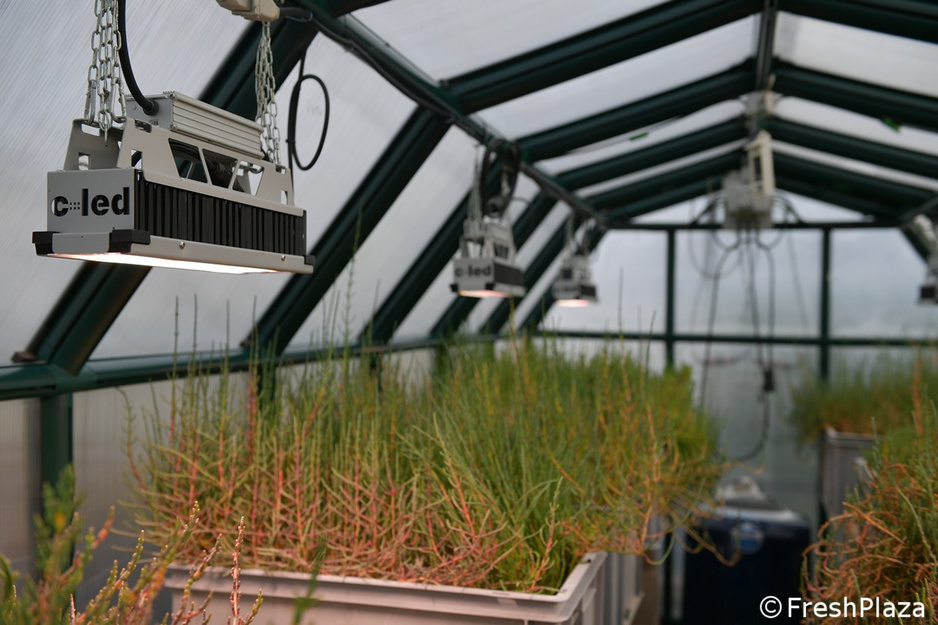
The collaboration between C-LED and several research groups at the Agripolis Campus of the University of Padua began several years ago with a clear objective: to provide ultra-high-efficiency lighting systems capable of meeting the university researchers' requirements. "In the scientific field," explain Raffaello Montanari, C-LED's sales director, and Cristian D'Elia, technical manager, "lamps must not only support plant growth but also guarantee the fundamental prerequisite of any study: the total replicability of data to ensure flawless scientific validation." To meet these requirements, C-LED has developed and supplied full-spectrum lighting solutions. These are perfectly balanced light recipes that integrate red and blue wavelengths essential for capturing chlorophyll absorption peaks, with an appropriate proportion of green and far-red light. This synergy ensures an excellent photosynthetic rate and proper photomorphogenesis in cultivated plants. C-LED is able to design and assist companies and research organisations in increasing the efficiency of their lighting systems A prime example of this technology is its application to glasswort: in this specific case, the quantity and spectrum of light have been calibrated to support the species' intensive vegetative growth, simulating the ideal solar radiation conditions to maximise biomass synthesis.C-LED modules have been designed to operate with maximum efficiency. In greenhouses, the integration of natural light serves to ensure crops receive a constant DLI (Daily Light Integral), a crucial factor in maintaining the stability of research, particularly during the autumn and winter months."C-LED," concludes Montanari, "is proving itself not only as a technology supplier but as a true strategic partner for academic excellence, transforming light into the most precise scientific tool available to future research."
From the article "A new propagation laboratory to improve production efficiency" published by Cristiano Riciputi on hortidaily on Mon 29 Jun 2026